What '3-season' actually means
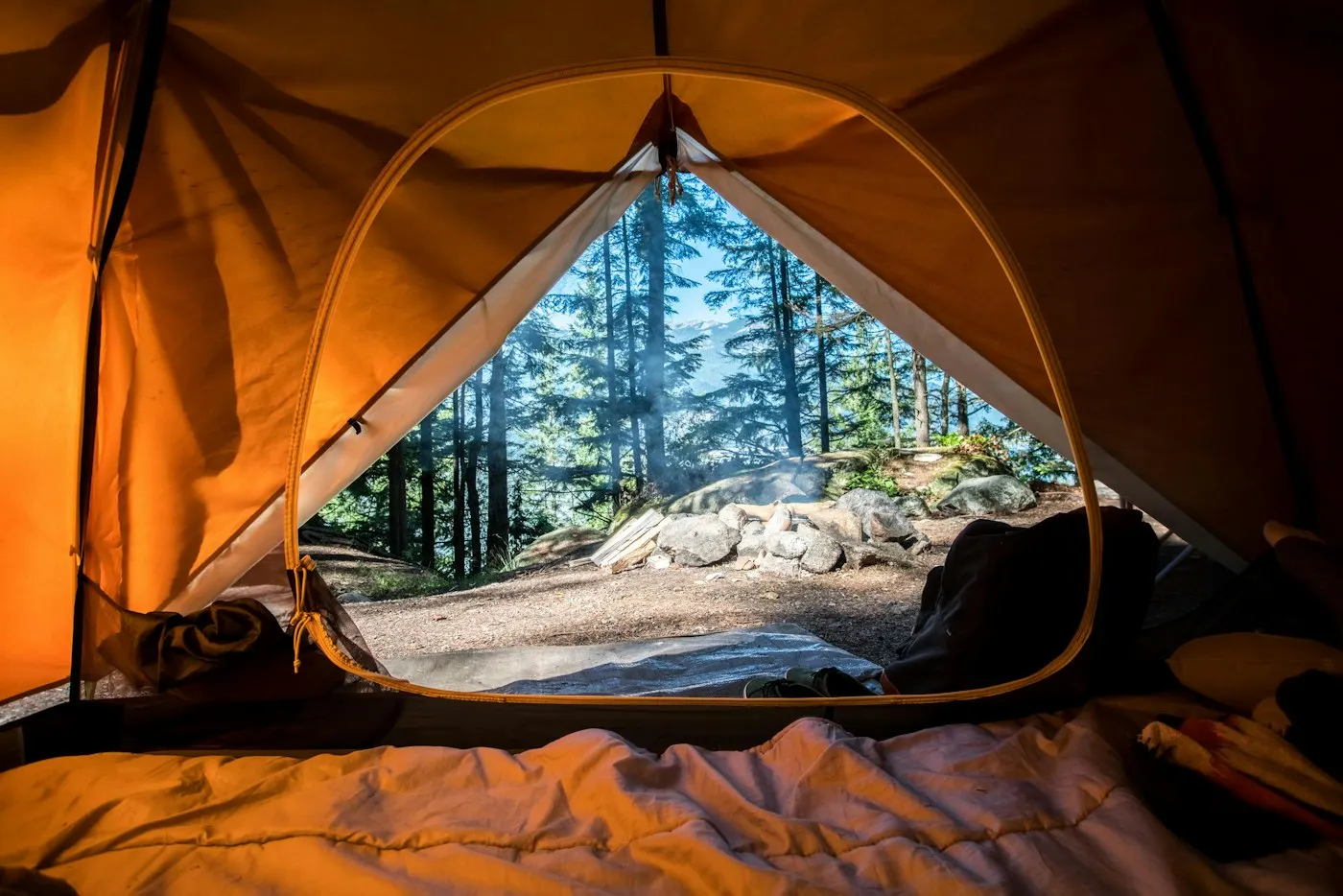
A 3-season tent, like the Fjell Basecamp 2, is built for spring, summer, and autumn conditions: rain, wind up to moderate gusts, and temperatures that stay above freezing most nights. It uses a lighter 2-pole frame to save weight.
The Basecamp 2 weighs 2.4 kg and has a 3,000 mm waterproof rating, which handles sustained rain fine but is not built to carry the weight of accumulated snow on the flysheet overnight.
What '4-season' adds
A 4-season tent, like the Fjell Polar Dome 3, adds a third pole and a steeper dome angle so snow slides off instead of pooling. It also uses a higher 5,000 mm waterproof rating and is wind-tested to sustained 70 km/h gusts.
The tradeoff is weight: 3.8 kg versus 2.4 kg, a 1.4 kg difference that matters if you are hiking in rather than driving to a base camp.
The practical rule for Norway and Sweden
If you are camping June through September at low elevation, a 3-season tent is enough and saves pack weight. If there is any chance of snow, high elevation, or you are camping October through May, the 4-season structure is the one that will still be standing in the morning.
We get this question constantly from customers buying for a single trip: when in doubt about the month or altitude, buy the 4-season. The weight penalty is smaller than the cost of a collapsed tent at 2 am.